
Search Union County Property Records
Start with the Union County PVA when you know the address. Its qPublic link is the county's official assessment-search route. Write down the parcel identifier and the exact spelling of the owner or taxpayer name. Then take those details to the Union County Clerk's DuProcess Web Inquiry, which accepts a name, parcel, street, legal description, instrument number, book, or page. The GIS Experience Builder shows where the parcel sits and what borders it. Current and delinquent tax material lives in the sheriff and clerk tax systems.
No single result settles everything. A parcel map is not a survey. An assessment is not an appraisal, and an index entry is not a title opinion. Match the parcel ID, legal description, parties, and recording references before treating two results as the same piece of land.
- Search the PVA source by address and save the parcel identifier.
- Search DuProcess for the current grantee and the prior grantor.
- Check sheriff and clerk tax sources for current or delinquent bills.
- Open the county GIS to place the parcel and compare its shape.
- Request a clerk copy when an image or older book is not online.
Union County Records Custodians
Union County property records are divided by function. The County Clerk records deeds, mortgages, releases, liens, plats, wills, and other land instruments. The Property Valuation Administrator, or PVA, classifies and assesses real property as of January 1. The sheriff collects the current tax bill, while delinquent real-estate tax work later moves to the clerk. Planning Commission staff maintain the county GIS and administer mapping, addressing, subdivision, and zoning work across the interlocal area.
Union County Deeds Since 1811
The clerk reports that Union County land instruments reach back to 1811. That long run makes the office central to any deed search. It serves both a recent purchase and an old farm chain. Modern searches can begin in DuProcess Web Inquiry. Its search criteria cover From and To parties, dates, instrument type, instrument number, book and page, parcel ID, legal description, consideration, subdivision, block, lot, street, and plat fields.
The online index has a cutoff point that varies. Older volumes and missing images still require the clerk's counter, a written request, or the Kentucky Department for Libraries and Archives microfilm route. Search both grantor and grantee indexes. A grantor gives an interest. A grantee receives it. Commissioner and sheriff deeds may sit with general deeds or in separate books. Estate and distress-sale research should check both paths.
The clerk's public search appears below with its detailed criteria. These help narrow a common name before you open an instrument.
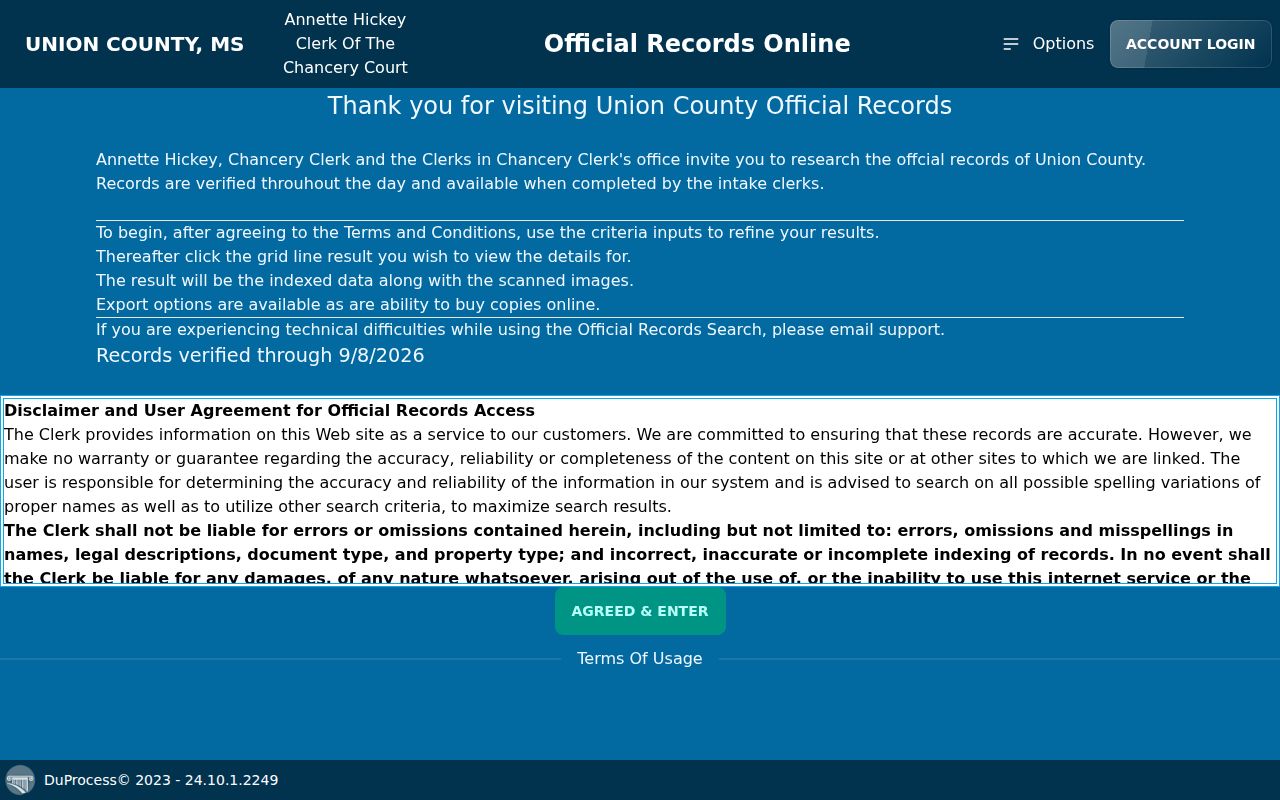
The clerk's public search page displays a broad land-index query form rather than a guarantee that every scanned book or image is complete.
Union County Search Access Choices
DuProcess is the public starting point for the land index. eCCLIX offers another route, but private-citizen registration caps use at five searches per day. Commercial accounts run on subscriptions, and those paid options should not be confused with the free public index. At the courthouse, staff can point a requester toward books, terminals, or copies the web route never exposes.
| Channel | Best Use | Known Limit |
|---|---|---|
| DuProcess | Name, date, book, parcel, legal, street, and plat criteria | Exact historical cutoff unverified |
| eCCLIX citizen account | Occasional private access | Five searches per day |
| Clerk counter or request | Older books, copies, and help locating an instrument | Copy and certification fees may apply |
| KDLA | Historic deed microfilm and archival guidance | Remote retrieval needs a specific citation |
Union County Property Record Types
One property can surface in several distinct records. Deeds document a recorded transfer, while mortgages, releases, and liens show claims or their release. PVA files supply assessment context. Tax systems track collection. Plats show recorded lots, blocks, easements, and dedications, and the GIS adds a reference map. Planning and court files can bring permit, zoning, foreclosure, partition, probate, or boundary-dispute context.
| Record Type | What It Documents | Kept By | Access |
|---|---|---|---|
| Deeds | Parties, transfer, legal description, recording reference | County Clerk | Index, counter, request, archive |
| Mortgages and liens | Secured claims, encumbrances, and releases | County Clerk | Land-record index and copies |
| Tax and assessment | Classification, assessed value, exemptions, and bills | PVA and Sheriff | Official pages, vendor, office |
| Plats and parcels | Lots, blocks, easements, and map context | Clerk and Planning Commission | Recorded plat and GIS |
| Building and zoning | Proposed work, zoning, drainage, and approvals | Planning Commission | Forms, staff, and records request |
The right record depends on the question. Turn to Union County deed records for the recorded transfer, and to the property-tax page for bill and assessment details. When lot or easement language matters, rely on a recorded plat rather than a tax-map line alone.
Union County GIS Context
The county GIS page opens an ArcGIS Experience Builder application. It is built for locating a parcel and reading spatial context. It also links to zoning or flood-risk resources. The interface depends on JavaScript. The county publishes no detailed list of parcel pop-up fields or a select-adjacent tool. Treat visible lines as reference geometry.
Planning Commission records matter beyond the map. The interlocal office handles addressing, building codes, subdivision review, and zoning. A subdivision application identifies the project, parcel, acreage, and lots. It also lists floodplain status, zoning, developer, surveyor, and owner. After review, the final plat is filed with the County Clerk. That path ties a map shape to an actual recorded document.
The county's GIS application appears below.
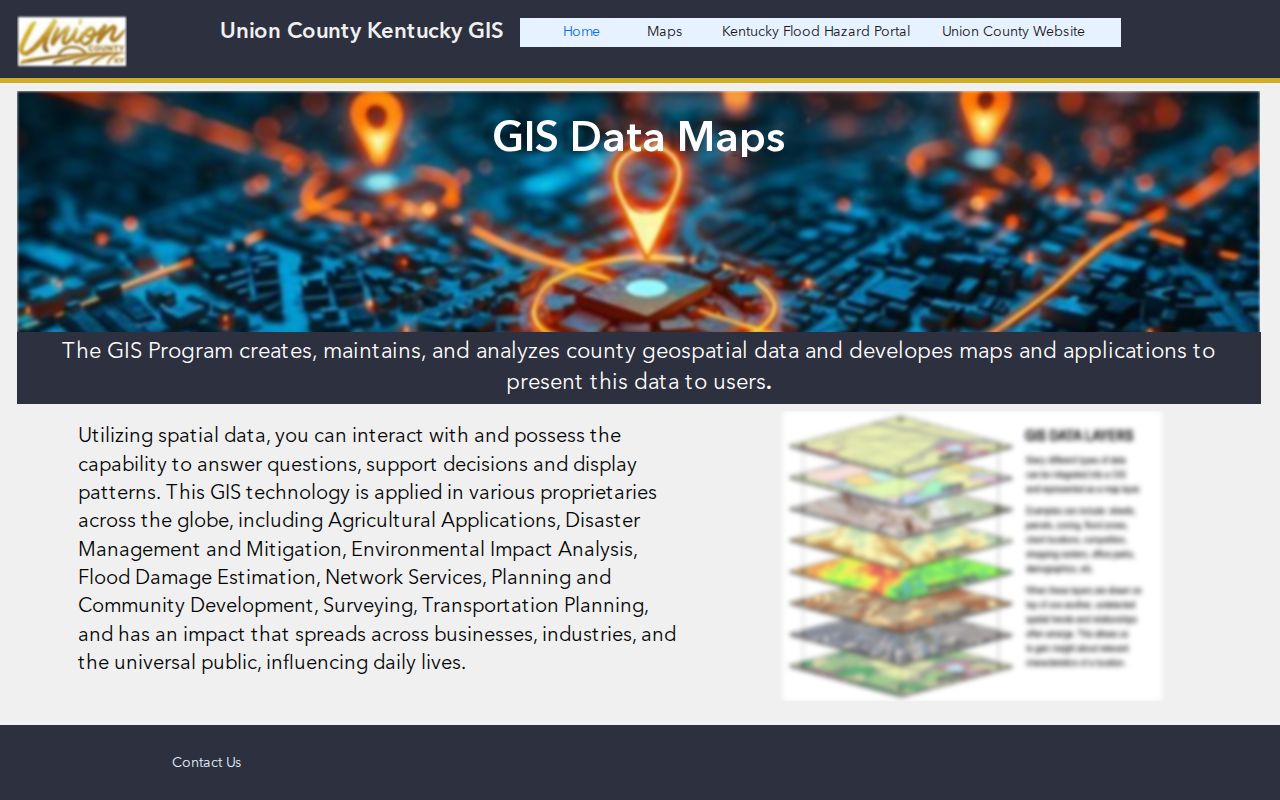
The official GIS entry point appears above as the county presents it. A displayed line on the map still does not amount to a legal survey.
Union County Assessment Calendar
The PVA assesses real property as of January 1. Property classes include residential, farm, commercial, mineral, and timber interests. Kentucky's homestead and disability exemption form asks for ownership, residence, birth information, disability facts when applicable, and property identification. Eligibility and the effect on taxable value must be confirmed with the PVA.
The official qPublic link could not be inspected because it returned an access block. Exact labels, wildcard rules, owner fields, and sale-posting speed are therefore not stated here. The annual assessment date is known; an update lag after closing is not. Confirm a recent transfer through the newest recorded deed rather than guessing when the assessment roll will change.
Union County Tax Trail
The sheriff runs Union County's current property-tax collection cycle. Payment methods appear there along with the discount, face, penalty, and delinquency calendar. Once the statutory transfer occurs, delinquent real-estate tax work moves to the County Clerk. The clerk posts delinquent listings and tax-sale guidance. A vendor search sits at Kentucky Delinquent Tax.
A tax bill is not proof of title. The named taxpayer may lag behind a deed or simply reflect a mailing relationship. Match the parcel against the PVA and the land index. For an assessed-value dispute, follow PVA review and Kentucky appeal procedures. For payment status, ask whichever office holds the bill at its current stage.
Union County Fraud Alerts
DOC ALERT provides a free name-based notice. It applies whenever a document is recorded in a participating county. Enrollment requires county confirmation, a name, and email confirmation. The service can flag a new filing for an owner of record. It cannot block a deed or rule on a document's validity. It also cannot replace regular review of the land index.
The DOC ALERT enrollment source is pictured below. The screen displays the sign-up path tied to the county's recording service.
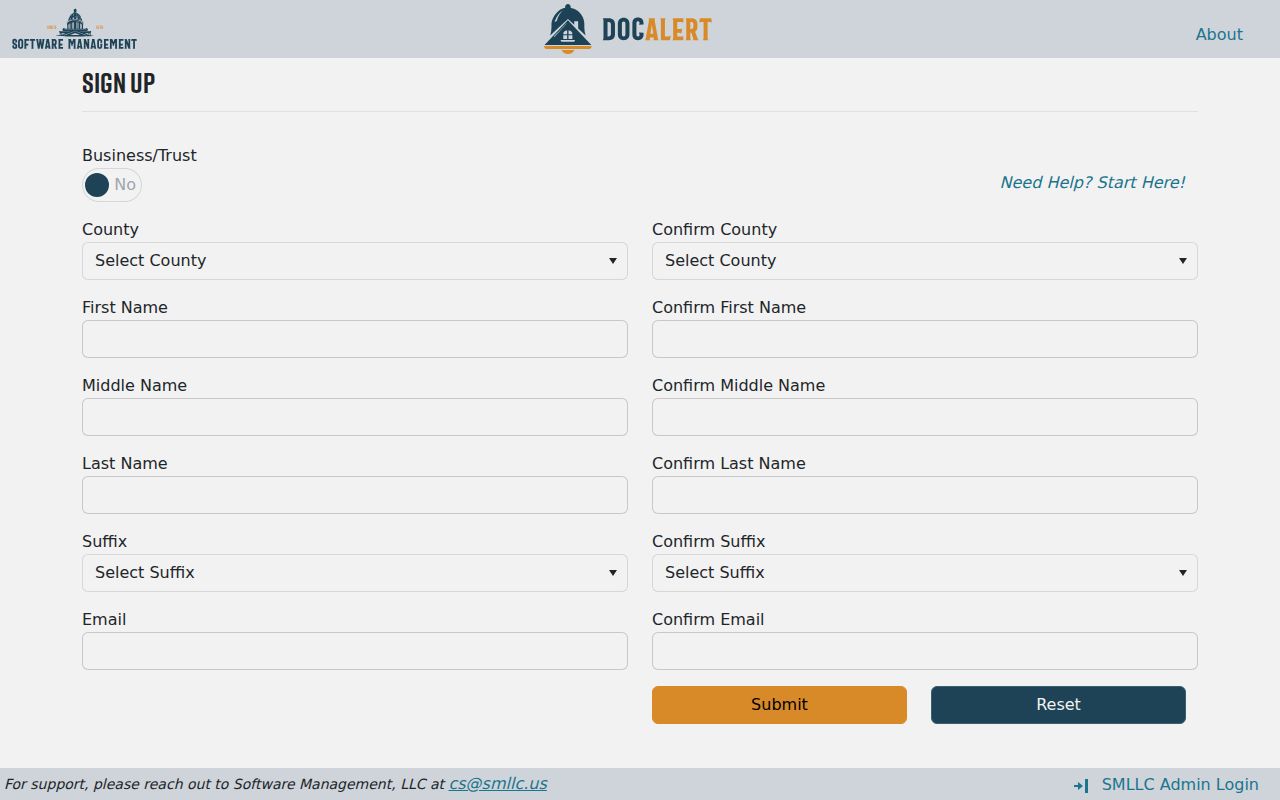
Treat the notice as a prompt to contact the County Clerk and inspect the recorded instrument itself.
Union County Historic Record Clues
KDLA's deed finding aid notes that Kentucky deeds may be arranged by county, type, and year. Grantor and grantee indexes may be separate or bound inside a volume. References to prior books became more common around 1890. For an earlier gap, assessment rolls and tax rolls can help establish continuity of ownership. They are not title proof.
Local newspapers open another path into Union County history. The Kentucky Digital Newspaper Program includes Sturgis titles. The public-notice archive can surface estate notices, commissioner sales, sheriff sales, plats, rezoning, and litigation leads. Search Morganfield, Sturgis, Uniontown, Waverly, surnames, and older place names. Then return to the deed or court file for the controlling record.
Union County Court Record Links
Property disputes in Union County may land in Union Circuit Court or Union District Court. Others go to CourtNet. Some go to the Western District of Kentucky. Useful case terms include foreclosure, lis pendens, quiet title, partition, boundary, mechanic's lien, condemnation, probate, and estate. CourtNet searches by jurisdiction and party or business name. It then exposes case and docket context subject to access restrictions.
A docket event is not the filed pleading. A judgment is not automatically a recorded conveyance. After a foreclosure or commissioner sale, check the County Clerk for the deed. That deed entered the land chain. Older state court records may require a locator number from the clerk. The State Records Center can then retrieve them.
Union County Open Records Requests
A record may not be online. Send a narrow written request to the office that created or keeps it. The County Clerk posts a Kentucky Open Records Act procedure. It asks for enough detail to locate the record and distinguishes residency from commercial-use issues. The clerk states a three-working-day determination and advance payment. Copy charges also apply. Fiscal Court maintains a separate electronic request route for records in its custody.
Name the record rather than asking an office to resolve a legal question. For a deed, give the parties, approximate date, instrument type, and parcel or legal description. Include any book or page already found. For planning material, provide the street, parcel, subdivision, and project type. Include the date range. For a court file, supply the case number or party. Ask whether a record-center locator is needed.
Useful Record Terms
A parcel is the assessment and mapping unit. A plat is a recorded map of lots or divisions. The situs address identifies the property's location, while a mailing address shows where correspondence goes. A certified copy bears the custodian's formal certification.
Union County Estate Transfers
A death splits the paper trail. The PVA, County Clerk, probate court, and vital-records office each hold a share. Probate explains who administers the estate. The land index shows the instrument that entered the real-property chain. Expect to meet executor's deeds, administrator's deeds, commissioner's deeds, affidavits of descent, recorded wills, renunciations, and court orders.
Start with the decedent's full name and a rough date. Run a CourtNet search and ask the local court clerk for the probate file. Then check the County Clerk indexes. Search the decedent, the estate, the heirs, the executor, and the administrator. Check both grantor and grantee roles. Kentucky's Office of Vital Statistics issues death certificates. Eligibility and identification rules apply.
Obituaries offer clues. They never prove an heir took title. Older estates may demand deed books, tax rolls, newspapers, cemetery records, church material, or local collections. The Union County Public Library and KDLA are sensible referral points. Keep every spelling variant. Tell a fiduciary named in a case apart from the grantee on the recorded conveyance.
Union County Liens and Releases
Ownership is only one slice of a parcel's public record. The County Clerk also records mortgages, assignments, releases, mechanic's liens, federal tax liens, state tax liens, judgment liens, easements, and restrictions. DuProcess filters these filings by party, instrument type, filing date, parcel ID, legal description, book, page, street, and consideration range. Search both directions. A current owner can appear in the From column as well as the To column, since a release, assignment, or corrective filing puts the same party in a different index role.
Read with care. A recorded mortgage does not show today's loan balance. A release shows that a recorded claim was released according to the instrument's own terms. Neither proves every possible encumbrance is gone. Mechanic's-lien enforcement can also spawn a court case while the lien itself stays a clerk record. Check the details. An index entry alone is thin evidence, so match the instrument number, recording date, parties, legal description, and any referenced prior filing before drawing a conclusion. Pull the document image or request a clerk copy when an entry looks incomplete.
The clerk's published categories and fee schedule help. They classify an unfamiliar record quickly. Labels matter here. Deeds, affidavits supporting title, affidavits of descent, wills, plats, mortgages, releases, and liens each serve a distinct filing purpose. An affidavit can state claimed facts without conveying title the way a deed does, and a recorded restriction can limit land use without changing the grantee on the latest transfer.
Some matters run deeper. A purchase or estate matter calls for a professional title examination, which follows the legal description, identifies interests and exceptions, and tests whether later documents release or modify earlier claims. Public Union County property records supply the source documents, not the final legal opinion.
Limits of Union County Records
Union County property records can identify a recorded grantee, an assessed parcel, a taxpayer, a lien, a plat, or a court case. They have limits. They do not name occupants. Nor do they fix surveyed boundaries, guarantee clear title, or state what a property would sell for today. Some records stay sealed. Protected court material, confidential personal details, and Kentucky Safe at Home address substitutions all sit at the edge of ordinary public access, and the program's compliance guidance says real-estate holdings are not concealed.
Lawful use. Use Union County property records for due diligence, boundary research, tax questions, history, and civic transparency. Never use owner data to stalk, harass, or harm anyone.