
Find Out Who Owns a Union County Property
Reliable answers come from pairing the PVA's assessment identity with the most recent recorded conveyance. The address gets the search started. The parcel identifier and legal description keep it tied to the right tract of land. For Union County deed records, the County Clerk's DuProcess index serves as the recording source. The PVA anchors the assessment side.
- Search the address through Union County PVA/qPublic and copy the parcel or map/account identifier and displayed owner name.
- Search DuProcess Web Inquiry by that identifier, address, legal description, or party name.
- Read the newest relevant deed's To/From parties, file date, description, parcel ID, and prior reference before identifying the grantee as the current owner.
- If the grantee is an entity, verify its exact legal name in the Kentucky Business Entity Search; an agent is not automatically the property owner.
Use the PVA Without Inventing Missing Labels
The PVA is the right first stop for finding a Union County property owner. Its qPublic site limits what outside systems can pull. Plan on reading the fields the live result actually shows. January 1 is the annual assessment date. That fixed date governs assessments, not when a sale updates the online display. For timing questions, rely on the newest recorded deed rather than the card.
Let the Latest Union County Deed Confirm the Name
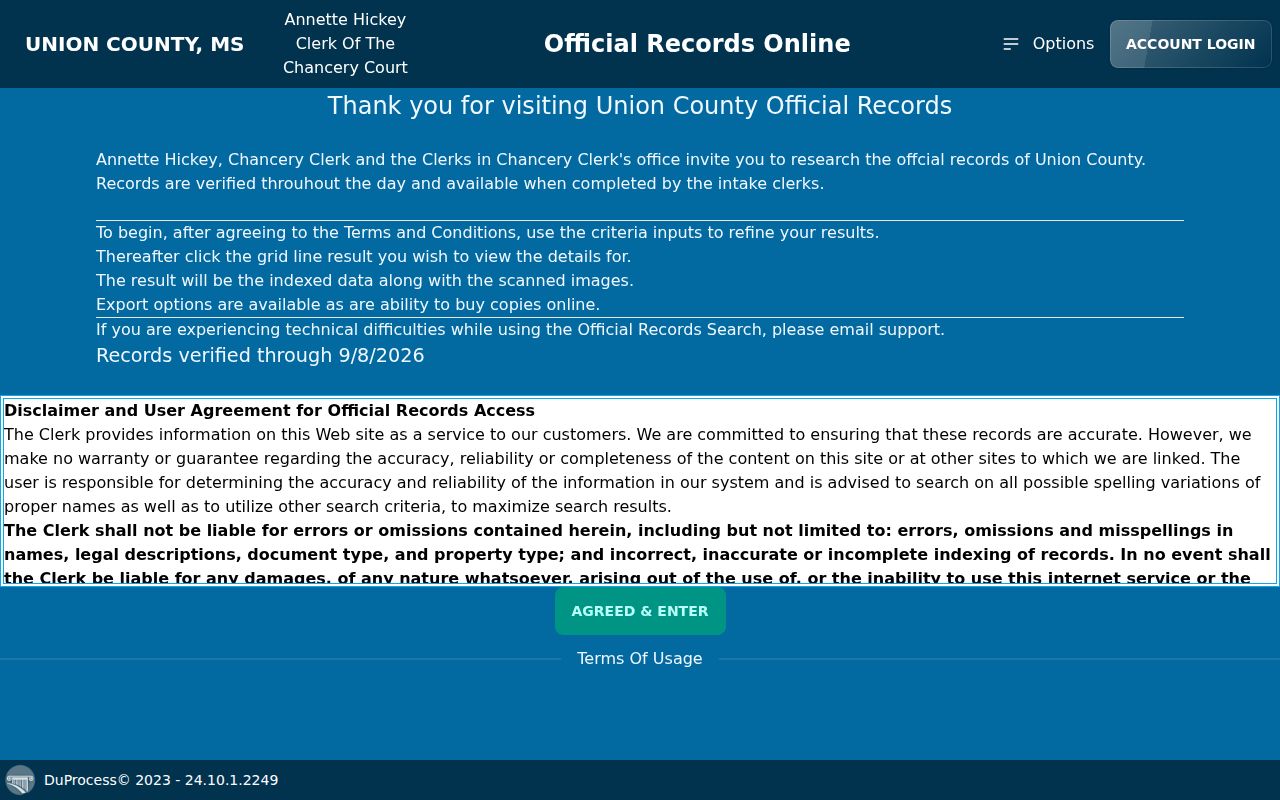
DuProcess accepts name criteria in several forms. You can search To and From parties, matched or full-name modes, and clues from instrument, parcel, PPIN, patent, address, legal description, subdivision, and date. A result can display the instrument number and type. It also shows file date, page count, parcel ID, description, parties, filer, status, and image options. Run the name in both directions, then check that the description points to the same tract.
The official recorder portal displays these search controls. Open DuProcess to inspect them.
Party names, dates, a parcel clue, and the legal description together beat a name match alone every time.
Decode Union County LLC, Trust, and Estate Owners
An LLC, trust, estate, life estate, or fiduciary can show up. That happens where a personal name should be. Search the exact recorded grantee first. A Secretary of State profile may list an entity ID, status, registered agent, principal office, officers, and filings. None of that proves who actually holds the land. Probate files, recorded affidavits, and fiduciary deeds often explain a transfer after a death. Send current-owner details to Union County current owner records. Send history to previous owners.
Compare Union County Ownership Sources
No single display answers every ownership question, so use each source for its actual role and keep the dates straight.
| Source | Owner Info It Gives | Access |
|---|---|---|
| PVA assessment roll | Assessment-linked owner/taxpayer lead | qPublic link or PVA office |
| County Clerk deed index | Grantee on the latest matching conveyance | DuProcess, eCCLIX, or courthouse |
| Kentucky Secretary of State | Entity status, agent, officers, office | Free business search |
| County GIS | Spatial parcel context and identifiers | Experience Builder |
The person who receives the tax bill may never set foot on the property. The occupant may hold no recorded interest at all. A registered agent accepts legal papers for an entity but may not be a member or a landowner.
Use Union County DOC ALERT as a Change Signal
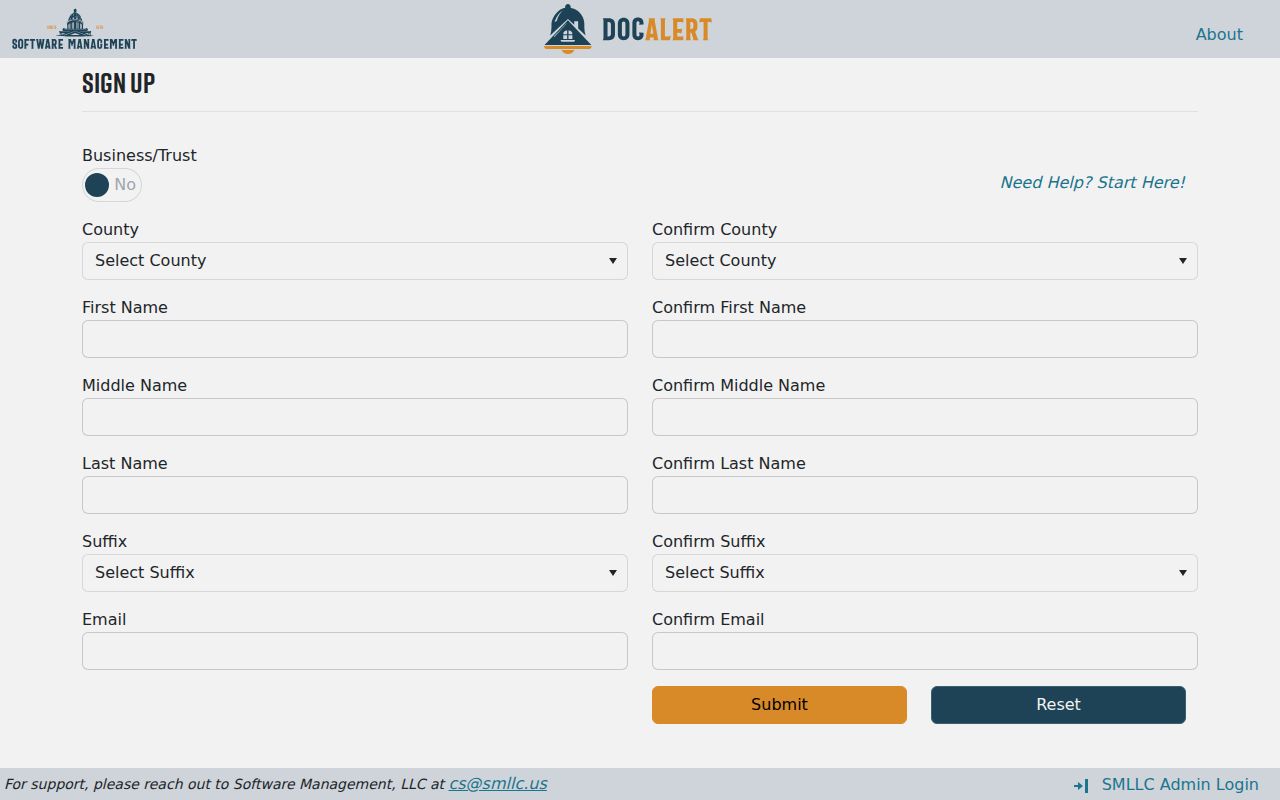
The Clerk offers a free service called DOC ALERT that emails you after a monitored name appears on a deed or mortgage. Treat it as notification, not fraud protection. Name-based enrollment can trigger matches that need a closer look at the actual document. Review DOC ALERT on the official enrollment page before registering.
Any alert should point you back to the recorded instrument. Parcel and party details there settle whether the filing concerns the property in question.
Understand Kentucky's Real-Estate Privacy Limit
Kentucky Safe at Home gives qualifying participants a substitute mailing address. The state is clear, though: the program does not conceal real-estate holdings. That limit does not license republishing sensitive details or tying an owner name to occupancy. Use official property records for a defined purpose. Reach an owner through an appropriate public mailing route.
- Owner of record
- The party a dated public record associates with ownership.
- Grantee
- The receiving party on a conveyance.
- Situs address
- The property's physical-location address.
- Mailing address
- The destination for assessment or tax correspondence.
Keep Searching When Union County Portals Stop
Online access is only one channel. The Clerk states that all land instruments are public in the office at 100 West Main Street, Morganfield. The Clerk also provides a written records-request process. DuProcess supplies a public index, while eCCLIX offers separate private-citizen and commercial access. Private citizens are limited to five searches daily. Kentucky open-records guidance sets a state baseline, but the current custodian's instructions should control how a request is submitted.
For older ownership, ask the Clerk for the relevant deed book, index, plat, or recorded instrument. Ask the Kentucky Department for Libraries and Archives about microfilm. A narrow request should still include every known variation. That covers party name and initials, estate or trust suffix, parcel or PPIN, subdivision, block, lot, street, legal-description phrase, instrument type, and date window. This beats assuming that no online hit means the owner is unknown. Offline deed records often hold the answer.
Search Union County Owner Names in Both Directions
DuProcess keeps To and From parties separate and supports matched or full-name approaches. Start with the owner string from the PVA. Then try surname and initials. Also try married-name variations, trust or estate wording, and an entity's exact registered form. Search the person as both grantee and grantor within a sensible date window. A current owner may show up as grantee on an acquisition deed. The same person may later appear as grantor on a mortgage, easement, correction, or partial conveyance.
Name results earn trust only after the land matches. Compare parcel ID or PPIN. Check street, subdivision, lot and block, patent, legal-description phrases, instrument date, and prior-reference details. In a compact county, surnames repeat often. A shared name proves neither identity nor family ties. Let the Union County property records, not the name alone, close the case.
Trace Union County Ownership Through an Estate
A death rarely updates every Union County record at once. The probate file, the tax roll, and the recorded land index can sit at different stages of the same ownership transition. So start with CourtNet and the local court clerk for the estate case. Then check the County Clerk's index. It holds wills, affidavits of descent, renunciations, executor and administrator deeds, commissioner deeds, and similar court instruments. The probate appointment tells you who holds authority. The recorded instrument ties that authority to the parcel. Search decedent, estate, fiduciary, heirs, and grantee alike. Match the legal description. Do not assume every asset in the probate file changed hands the same way. A death certificate or obituary can date the transition and name the relatives. But neither one proves title to the land.
Do Not Substitute Union County Taxes for Ownership
Taxes tell you who paid, not who owns. The Sheriff collects current real-estate taxes in Union County, and delinquent bills move to the County Clerk after April 15. A name on the tax bill reflects billing. It is not automatic proof of title. The same caution applies to a tax-sale notice. A third party who buys a delinquent certificate does not receive an immediate conveyance of the property.
Treat a tax result as a confirmation of parcel identity, tax year, amount, status, and the responsible collection office. Then go back to the PVA owner lead. Pull the newest matching recorded deed, and if litigation, a commissioner sale, or a sheriff deed is involved, follow the court case to the resulting instrument before naming the new owner of record.
Know What a Union County Owner Lookup Cannot Prove
An owner lookup has real limits. A name is not a title opinion. It does not establish occupancy, boundaries, valuation, or authority to enter the land. Paying taxes does not prove title. Homestead indicators serve the exemption question, not proof of residence or ownership, and a purchase or dispute can still call for a professional title examination.
When the name will not reconcile online, use every documented access channel. Land instruments are public at the Union County Clerk's office. The office reports records back to 1811. Access runs through the courthouse counter, the clerk's current written open-records procedure, and eCCLIX in addition to DuProcess. Private eCCLIX registration allows five searches per day. Commercial subscriptions carry separate terms. Neither route places every historic book image online.
Older or incomplete trails can continue in deed books and microfilm held by the Kentucky Department for Libraries and Archives. Probate or court material may explain an executor, commissioner, sheriff, or estate transfer, but the associated instrument still has to be matched back to the land record. Stop at a documented gap instead of filling it with a likely surname or an undated directory entry.
Lawful use. Find a Union County property owner for legitimate property research, estate work, or purchase diligence. Never use owner information to stalk, harass, intimidate, or harm anyone.