
Read the Union County Owner-of-Record Card
The Union County PVA/qPublic portal serves as the county's official assessment search. Its results can vary from one visit to the next, so treat the terms below as useful record concepts rather than exact qPublic labels. Read only what the current owner-of-record card actually displays. Preserve the assessment date shown on that card.
| Owner or taxpayer name | An assessment-roll lead; confirm the exact live label |
|---|---|
| Mailing address | Where assessment or tax correspondence is directed |
| Situs address | The physical location used to identify the tract |
| Parcel/map/account key | The cross-reference joining PVA, GIS, tax, and deed research |
| Sale or deed reference | A lead to the recorded conveyance, if the live card supplies it |
| Assessment date | January 1 is Union County's verified annual assessment date |
The owner of record is not always the occupant. A mailing address can legitimately differ from the situs. Neither field alone proves title, so the parcel identifier and the newest matching deed supply the essential cross-check.
Understand Union County's January 1 Snapshot
The Union County PVA appraises real and personal property under Kentucky's fair-cash-value standard. January 1 is the assessment date. That anchor fixes one annual moment. The county publishes no sale-to-roll lag. A PVA name is a useful clue, not proof that no newer deed exists after a closing.
The PVA office sits at 100 West Main Street, PO Box 177, in Morganfield. Weekday hours run 8 a.m. to 4 p.m. When the portal is down or a label is unclear, ask the staff for the dated public assessment record rather than guessing.
Separate Owner, Mailing, and Situs Fields
An owner name identifies the person or entity on the roll. The mailing address routes official correspondence. The situs pinpoints the property itself. Those values can diverge whenever the owner lives elsewhere. The holder may instead be an entity, an estate, or a trust. A multi-tract farm produces the same split. So does a parcel whose postal city sits outside its municipal boundary.
- Owner of record
- The party a dated official record associates with the property.
- Assessment roll
- The PVA's annual valuation record, anchored to January 1.
- Situs
- The physical-location address, distinct from legal description.
- Recording lag
- The interval between execution/recording and another system's update; Union County's operational interval is unverified.
Confirm the Current Union County Owner
Confirming the present owner takes two steps. Start with a dated roll result, then search for any newer recorded conveyance. DuProcess, the Clerk's broad public index, matches a tract in more ways than a name-only query.
- Open PVA/qPublic by address and record the displayed owner/taxpayer name, parcel key, situs, mailing address, and date.
- Search DuProcess using parcel, address, legal-description, party, and date clues.
- Identify the newest deed that matches the same land and read its To/From parties, file date, instrument type, description, and prior references.
- For an entity grantee, use the Kentucky SOS search to disambiguate the entity; do not call its agent the owner.
- Grantee
- The party receiving the interest in a conveyance.
- Vesting
- The deed language describing how the interest is held.
- Registered agent
- An entity's process contact, not automatically its member or property owner.
Read the Latest To/From Instrument
DuProcess searches by name in four ways. To, From, matched, and full name queries all run alongside instrument, parcel, PPIN, patent, address, legal description, subdivision, and date windows. A result can carry the instrument number and type, file date, pages, parcel ID, description, parties, filer, status, and image actions. The newest filing date is not enough. Confirm the correct legal description and conveyance type too.
The DuProcess inquiry page displays the recorder's own search fields; open the live index for the current options.
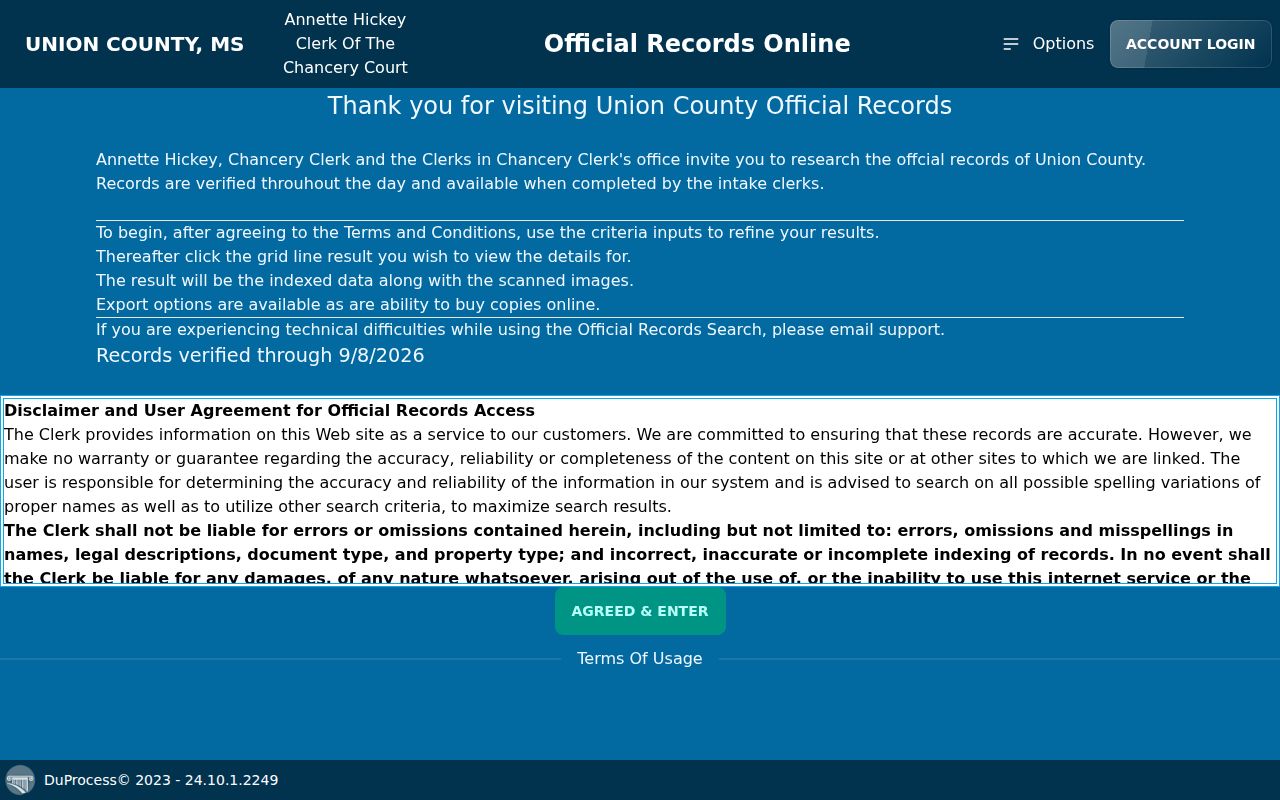
A recording record carries parcel and party clues. Together they bridge the PVA's name to the deed's current recorded ownership.
Verify Trust, Estate, and LLC Names Exactly
A roll can name a trust, an estate, an LLC, a corporation, or a fiduciary. Preserve every punctuation mark and suffix. Keep trustee capacity and estate wording intact too. Then search those variants in the deed index. A business entity profile separates similar names, while a probate file, a recorded affidavit, or a fiduciary deed explains a death transfer; none of them replaces the conveyance affecting the tract itself.
Monitor New Union County Recordings
The Clerk promotes a free DOC ALERT service. It emails you when a monitored name appears on a new deed or mortgage, though it neither prevents fraud nor continuously certifies the current owner. Enrollment takes a county, name, and email.
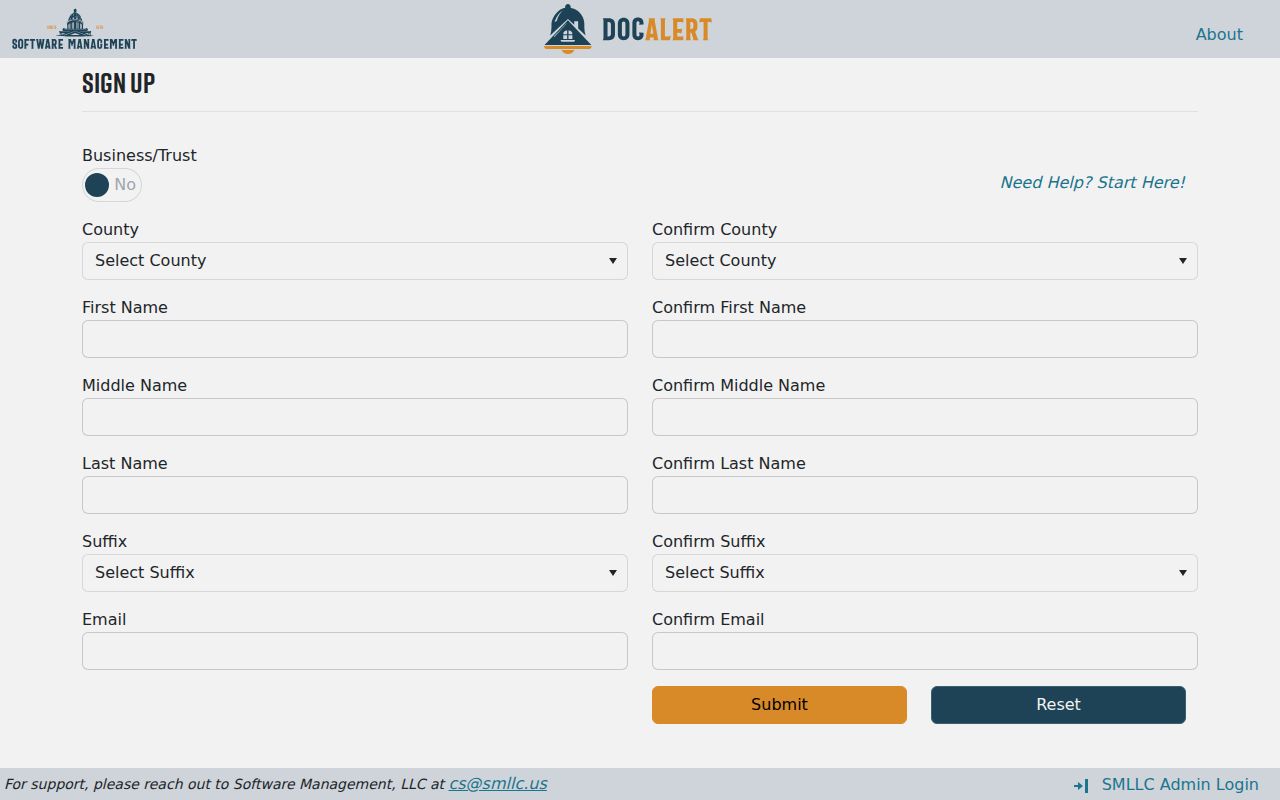
Open the instrument behind the alert and match its parcel and parties.
Resolve Conflicting Union County Owner Names
Two public systems can disagree honestly. A deed may postdate the annual assessment snapshot. A roll may abbreviate an entity or fiduciary. A mailing field may name a tax recipient rather than an occupant, and a search may land on a neighboring tract or a severed interest. Record the date and label attached to every name before deciding which one answers the present-owner question.
Then apply a three-way match. First, require parcel, account, or map identity, or the same legal description. Second, match the situs, subdivision, or lot. Third, match the parties and the instrument date. If one leg fails, broaden the search with name variants, or ask the PVA and Clerk to identify the record behind their display; never merge people merely because they share a surname in a compact county.
Identify the Present Interest, Not Just a Name
The newest filing is not always a deed. Union County records also hold mortgages, releases, liens, restrictions, easements, corrections, plats, wills, and fixture filings. Read the instrument type first. Then read the operative language before treating a To or From party as the current owner. A mortgage names borrowers and lenders. A release clears an encumbrance. An easement can grant a limited right without conveying the whole tract.
Vesting can be divided too. A life estate, trust, estate administration, co-ownership, severed mineral interest, or partial-tract conveyance may take more than one document to describe who holds which interest. The PVA's assessment name is a starting point, while the recorded deed and its related instruments define the land and interest conveyed.
Ask Union County Offices a Date-Specific Question
When the web display conflicts with a recording, give the PVA and the Clerk a precise, date-specific question. Include the parcel or map/account number, situs, party name, deed instrument or book/page reference, and the date each system shows. Ask the PVA which date the displayed name reflects. Ask the Clerk whether a later matching conveyance has been recorded. January 1 is the annual assessment date. The PVA publishes no operational refresh interval. Keep that uncertainty in the answer. Say plainly that the dated roll showed one name and a later deed another, if that is what the records establish. Do not invent a typical lag. Never predict when qPublic will update, or imply that a phone response replaces a certified instrument.
Use Union County Owner Records Lawfully
A public mailing address works for legitimate property correspondence. It proves nothing about residence or occupancy. Kentucky Safe at Home gives qualifying participants substitute addresses. Yet the program expressly excludes real-estate holdings from concealment. That gap is not permission to expose sensitive personal context. Keep the inquiry tied to the parcel itself. Use proportionate, legitimate contact.
If the present name stays unclear, contact the Union County Clerk at 100 West Main Street in Morganfield. You can also follow the office's written-request procedure. All land instruments are public in the office. Recordings there go back to 1811. eCCLIX adds another citizen and commercial access route. Private-citizen accounts are capped at five searches per day. Older books may need microfilm help. Try the courthouse or the Kentucky Department for Libraries and Archives.
Don't settle a conflict by the newest date on screen. Confirm the document is a conveyance. It could be a mortgage, lien, release, restriction, correction, or an unrelated same-name filing. Match the parcel or legal description, situs or plat location, parties, and instrument date. A correction deed can demand more reading than the index label. So can a life estate, probate affidavit, or commissioner deed.
Current-record caution. The Union County assessment roll can lag a newly recorded deed. Confirm the newest matching conveyance, and never use public owner data to stalk, harass, or intimidate.